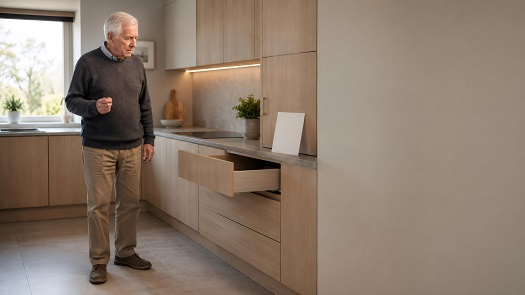
Designing a home environment for a senior loved one with dementia can significantly enhance his or her quality of life. Small intentional changes to the physical space can reduce stress, prevent accidents, and preserve a sense of familiarity and autonomy.
How Does Lighting Affect Dementia Patients at Home?
Poor lighting is one of the most overlooked triggers for confusion and anxiety in people with dementia. The right lighting setup can make a meaningful difference:
- Use bright consistent lighting throughout the home to reduce shadows, which can be misinterpreted as obstacles or threats.
- Install nightlights in hallways, bathrooms, and bedrooms to prevent disorientation at night.
- Maximize natural light during the day to support healthy sleep-wake cycles.
- Avoid flickering bulbs or harsh fluorescent lighting, which can cause agitation.
What Layout Changes Make a Home Safer for Someone with Dementia?
A clear, uncluttered layout reduces the risk of falls and helps people with dementia navigate their environments more confidently:
- Remove loose rugs, cords, and unnecessary furniture that create trip hazards.
- Keep frequently used rooms like the bathroom and kitchen easy to access and clearly visible from common areas.
- Use contrasting colors on floors and walls to distinguish spaces (e.g., a dark-colored toilet seat against a white toilet).
- Install grab rails in bathrooms and along stairways for added stability.
Certain age-related conditions can make it more challenging for eastern Alabama seniors to age in place safely and comfortably, but Auburn 24-hour home care experts are available around the clock to help seniors manage their health. Whether your loved one is living with dementia or recovering from a stroke, you can trust the professional 24-hour caregivers from Home Care Assistance to enhance his or her quality of life.
How Can Visual Cues and Signage Support Independence?
Simple, clear signage can help a person with dementia navigate the home without relying on others for constant direction:
- Label cabinet doors and drawers with both words and pictures (e.g., a photo of plates on the dishes cupboard).
- Use color-coded areas to differentiate rooms or zones.
- Place clocks and calendars in visible locations to support time orientation.
- Keep personal items like a favorite chair or photo in consistent locations to reinforce familiarity.
What Sensory Considerations Should Be Factored into the Design?
People with dementia are often more sensitive to sensory input. Managing the sensory environment can reduce distress and increase comfort:
- Minimize background noise from televisions, radios, or loud appliances, especially during meals or rest periods.
- Choose calming neutral colors for walls and furnishings. Overly busy patterns can cause visual confusion.
- Incorporate familiar scents like a favorite candle or flowers to evoke positive memories.
- Avoid highly reflective surfaces, such as mirrors or glossy floors, which can cause misperception.
How Can Outdoor Spaces Be Made Dementia-Friendly?
Access to a safe outdoor environment offers significant benefits for mental and emotional wellbeing:
- Create a secure enclosed garden or outdoor area that allows for independent exploration without the risk of wandering.
- Use clear simple pathways with defined edges to guide movement.
- Plant familiar or fragrant plants like lavender or roses to stimulate pleasant sensory experiences.
- Ensure outdoor seating is stable, comfortable, and positioned in shaded areas.
Caring for a loved one with dementia can be extremely challenging, and a compassionate professional caregiver can be a wonderful source of support. Seniors can face a variety of age-related challenges. Though some families choose to take on the caregiving duties, there may come a time when they need a trusted Auburn home care provider. Families sometimes need respite from their duties so they can focus on their other responsibilities, and some seniors need around-the-clock assistance that their families are not able to provide. Home Care Assistance is here to help.
Caring for seniors with dementia can be challenging for family caregivers. Luckily, there is dementia home care Auburn families can rely on. Professional dementia caregivers help seniors with dementia stay safe and comfortable at home by preventing wandering, providing cognitive stimulation, and assisting with household chores. If you need professional home care for your loved one, our Care Managers are just a phone call away. Reach out to Home Care Assistance today
Frequently Asked Questions
What’s the most important change I can make to a dementia-friendly home?
+
Improving lighting is often cited as the highest-impact change, as poor lighting directly contributes to confusion, falls, and nighttime disorientation.
How do I prevent a loved one with dementia from wandering outside unsafely?
+
Installing door alarms, securing locks at nonstandard heights, and creating engaging indoor and enclosed outdoor environments can all reduce unsafe wandering.
Are there specific colors that are better for dementia-friendly spaces?
+
Soft muted tones like blues and greens are generally calming, while high-contrast colors are useful for distinguishing key objects, such as a brightly colored toilet seat or door frame.
How often should a dementia-friendly home environment be reassessed?
+
As dementia progresses, the home environment should be reassessed every few months or whenever a significant change in behavior or mobility is noticed.
Can familiar objects really help someone with dementia feel more comfortable?
+
Yes. Personal items such as family photos, cherished furniture, and meaningful keepsakes can reduce anxiety and reinforce a sense of identity and belonging.